
Office Relocation Checklist for Facility Managers: A Complete Guide

An office relocation is much more than moving desks, computers, and office supplies from one building to another. For facility managers, it is a complex business project involving multiple departments, building management teams, vendors, technology providers, employees, and executive stakeholders.
Every decision can affect the company’s budget, daily operations, employee productivity, and ability to serve customers. A poorly coordinated move can result in unexpected expenses, equipment damage, IT downtime, scheduling conflicts, and unnecessary disruption.
That’s why a successful office relocation begins with a comprehensive plan.
Whether your organization is moving to a larger headquarters, consolidating multiple offices, downsizing its footprint, or transitioning to a new workspace, this office relocation checklist for facility managers will help you organize the process, anticipate potential challenges, and keep your project on track.
Why Facility Managers Play a Critical Role in Office Relocation
Facility managers are often responsible for coordinating the many moving parts involved in a corporate relocation. They must balance the needs of employees, building management, IT departments, vendors, and senior leadership while ensuring the transition happens as efficiently as possible.
Unlike a residential move, a commercial office relocation can involve hundreds of employees, thousands of individual assets, specialized equipment, complex technology infrastructure, and strict building requirements.
The objective is not simply to move everything from one location to another. It is to ensure the new workplace is ready for business when employees arrive.
A structured relocation plan gives facility managers greater control over timelines, expenses, responsibilities, and potential risks.
The Complete Office Relocation Checklist for Facility Managers
The following checklist organizes the relocation process into manageable stages, from initial planning through post-move operations.
Table of contents:
- Establish Your Office Relocation Team
- Define the Scope, Budget, and Relocation Timeline
- Conduct a Complete Furniture and Equipment Inventory
- Evaluate the New Office Space and Develop a Floor Plan
- Coordinate Building Management and Access Requirements
- Develop an IT Relocation and Technology Continuity Plan
- Select the Right Commercial Moving and Relocation Partner
- Create an Employee Communication and Packing Plan
- Coordinate Furniture Installation, Storage, and Liquidation
- Prepare a Detailed Moving-Day Execution Plan
- Complete Post-Move Inspections and Operational Testing
- Common Office Relocation Mistakes Facility Managers Should Avoid
- How BRS Helps Facility Managers Manage Office Relocations
- Frequently Asked Questions About Office Relocation
1. Establish Your Office Relocation Team
Before contacting moving companies or scheduling the first site visit, identify the people responsible for managing the relocation.
For a larger relocation, designate one project manager to coordinate schedules, vendors and decisions. Give department leads a single place to flag issues. Agree on who can approve expenses, communicate changes to employees and authorize extra labor if the move runs late.
2. Define the Scope, Budget, and Relocation Timeline
Start by documenting the current office size, employee count, departments, furniture inventory, equipment, storage requirements, and any specialized assets that require additional attention.
Build the estimate from these cost categories and record who is paying each one.
- Moving labor and trucks, including any evening or weekend rates
- Packing labor, protective materials, crate delivery, rental and pickup
- Furniture disassembly, space planning, new purchases and reinstallation
- IT disconnects, equipment transport, reconnection and testing
- Storage, handling and redelivery if the destination is not ready
- Liquidation, recycling, disposal and final removal from the old office
- Building charges for freight elevators, security or after-hours access
- A contingency for extra crew time or changes to the move sequence
Set milestone dates for building approvals, furniture installation, network testing and employee packing. For each one, record the owner and the last date it can slip without delaying the next team.
3. Conduct a Complete Furniture and Equipment Inventory
One of the most important steps in an office relocation is understanding what your organization owns and what needs to move.
Conduct a detailed inventory of all furniture, equipment, and other physical assets.
Include:
- Desks, workstations, and office chairs.
- Conference tables and meeting room furniture.
- Filing cabinets and storage systems.
- Reception and common-area furniture.
- Computers, monitors, printers, and peripherals.
- Servers, networking equipment, and telecommunications systems.
- Specialized machinery or equipment.
- Records, archives, and library materials.
Identify which items should be relocated, replaced, stored, donated, recycled, or liquidated.
Put the decision beside each item on the inventory. For example, “six lateral files, floor 12” tells a bidder what exists. “Four to records room 410, two to recycling after staff empty them” tells the crew what to do and gives the bidder a scope to price.
4. Evaluate the New Office Space and Develop a Floor Plan

Work with department leaders and space planners to determine how the new location will accommodate employees, furniture, equipment, and daily business activities.
Mark employee seats, private offices, meeting rooms, shared equipment and storage on the destination floor plan. Check power and data at the desks that need them. Walk the route from the dock to each floor with the installer, especially for oversized pieces such as a boardroom table or a safe.
If your organization plans to reuse existing furniture, confirm that it fits the new layout. Some workstations may require reconfiguration, relocation, or additional components.
Space planning should happen before moving day. Without clear destination assignments, movers may place furniture and equipment incorrectly, creating additional labor and delaying the setup process.
Give the drawing a date and share the same version with department leads, IT and the moving crew. If a department changes its seating plan after labels go out, assign one person to update the drawing and the affected labels together.
5. Coordinate Building Management and Access Requirements
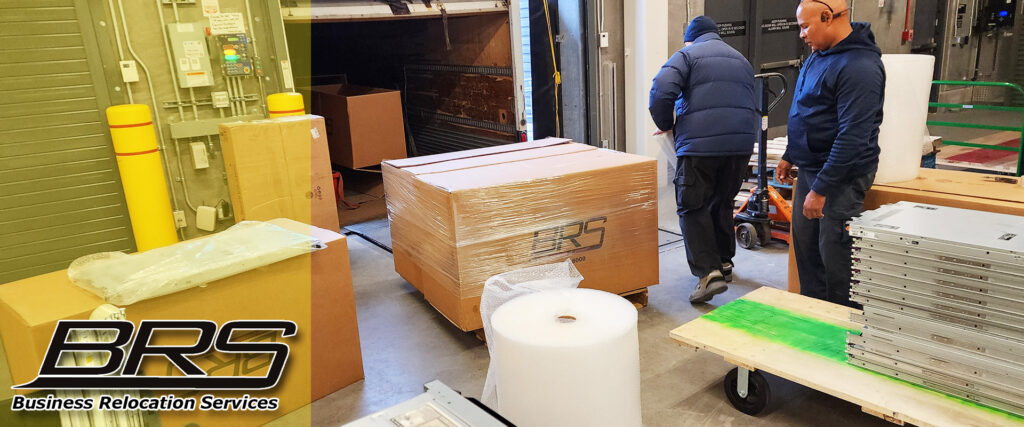
Building coordination is one of the most important—and frequently underestimated—parts of an office relocation.
Both the current and destination buildings may have specific requirements governing commercial moves.
Request the move packet from each management office. Confirm the following in writing before booking the crew.
- Permitted move dates and hours at both addresses
- Freight elevator reservations, cab dimensions and loading dock access
- Truck size limits, parking restrictions and the correct delivery entrance
- Certificate of insurance (COI) wording, submission deadline and acceptance
- Vendor registration, security procedures and temporary passes
- Required protection for floors, walls, elevators and common areas
- Rules for removing furniture, packaging and debris
6. Develop an IT Relocation and Technology Continuity Plan
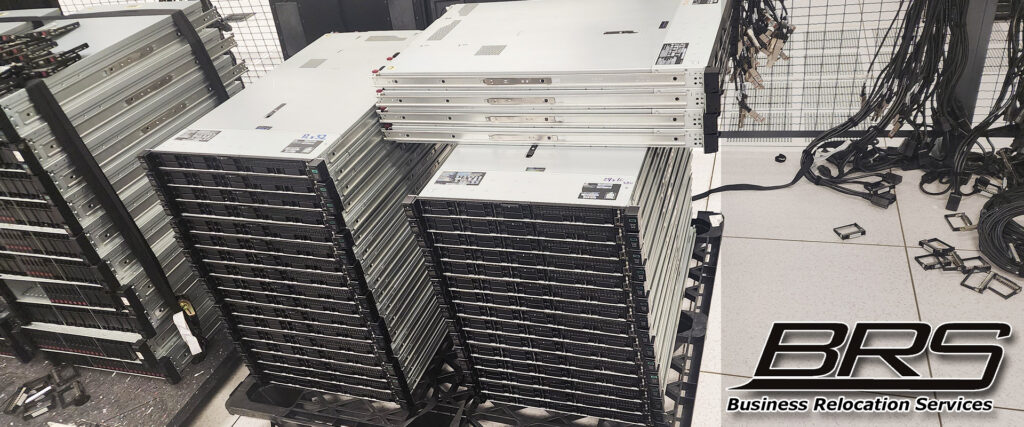
Technology is one of the most critical components of a modern office relocation.
Employees cannot perform their jobs effectively if computers, networks, phones, servers, and business applications are unavailable after the move.
Facility managers should coordinate closely with IT leadership to develop a detailed technology relocation plan.
List the desktops, servers, switches, phones, printers, conference room systems and access controls that need attention. For each, name the person responsible for disconnecting, packing, transporting, reconnecting and testing it. Confirm backup and recovery arrangements with IT before equipment is disconnected.
Schedule the technology move in coordination with the physical relocation. Critical equipment may need special handling, dedicated transportation, or a specific installation sequence.
Have an employee test one complete workstation with IT before the team signs off. Can they log in, open the application they use, take a call and print to the right device? Give critical departments a fallback location or work arrangement if the network is delayed.
For equipment planning, see the BRS guide to office IT relocation in New York City.
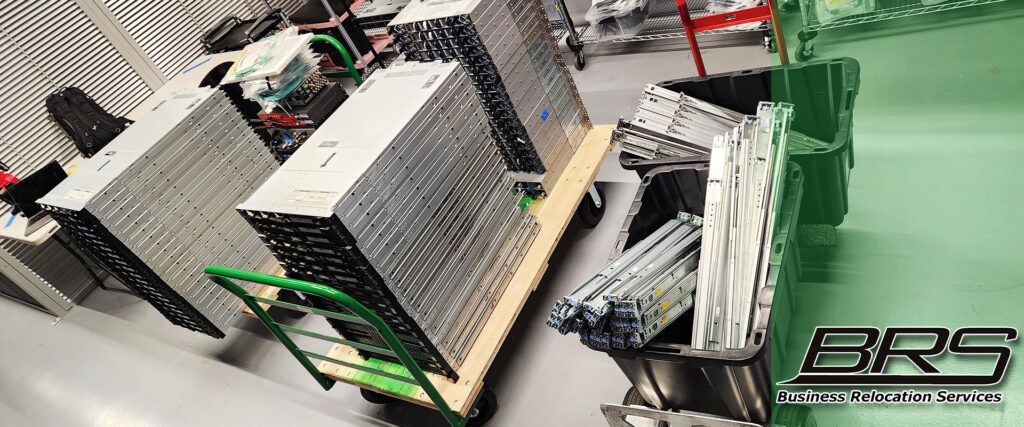
A successful relocation should include a technology readiness plan, not simply a transportation schedule.
7. Select the Right Commercial Moving and Relocation Partner

The lowest initial quote does not necessarily represent the best overall value. Facility managers should evaluate the provider’s experience, project management capabilities, available resources, and ability to coordinate the full scope of the move.
Walk bidders through the same spaces and send each the same inventory, floor plans and access hours. Ask for crew size, estimated hours, inclusions and exclusions in writing. These five questions make it easier to compare proposals.
- Who will run the job at each building, and who can I call after hours?
- How many loads can you complete within our freight elevator reservations, and what assumptions did you use?
- Who handles packing, furniture installation and IT disconnects and reconnects? Which tasks stay with our staff?
- What would trigger extra charges for waiting time, overtime, storage or a second delivery? Who approves them?
- Can you provide a reference for a move with similar access restrictions or a phased opening?
Ask potential providers to explain how they would organize the relocation, identify logistical challenges, and coordinate the different teams involved.
A qualified relocation partner should understand that commercial moving requires more than transportation. It requires planning, communication, scheduling, and careful execution.
For larger projects, consider working with a company that can supplement your internal team and coordinate multiple aspects of the relocation under a unified project plan.
8. Create an Employee Communication and Packing Plan
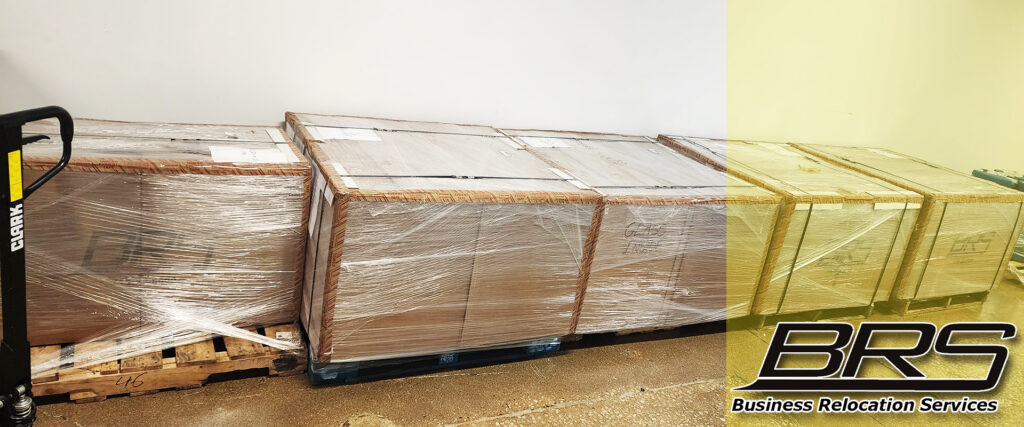
Develop a communication schedule that explains what is changing, when the move will happen, and what employees need to do before relocation day.
Give employees a packing deadline, instructions for personal items and equipment, a seating plan and the entrance to use on their first day. Show a completed label. “08–214–B” can identify floor 8, room 214, seat B. Put the same code at the destination so a crew member can place the crate without asking who owns it.
For an NYC agency office that serves the public, confirm with the agency lead when the counter and phones need to reopen. Identify who may handle records and who approves removal of surplus furniture before either is included on a truck manifest.
9. Coordinate Furniture Installation, Storage, and Liquidation
Some companies relocate existing furniture, while others purchase new workstations, replace outdated equipment, or redesign their office layouts.
Determine which furniture will be:
- Moved to the new location.
- Reconfigured or modified.
- Replaced with new furniture.
- Temporarily stored.
- Liquidated or removed.
Confirm installation schedules and ensure that furniture deliveries are coordinated with the relocation timeline.
Storage may also be necessary when the new location is not immediately ready or when furniture needs to be held temporarily during renovations.
For furniture going into storage, record the item count, condition, destination and person authorized to release it. Separate the first delivery from items that can wait. This lets the warehouse retrieve a department’s furniture in the order the floors become available.
Coordinating moving, installation, storage, and liquidation services can help simplify project management and reduce unnecessary handling.
10. Prepare a Detailed Moving-Day Execution Plan
Moving day should be the execution of a plan that has already been developed, reviewed, and communicated.
Before the relocation begins, confirm that all departments, vendors, and building representatives understand their responsibilities.
Give leads at both ends one move sheet with the building contacts, crew assignments, truck sequence and floor plans. For a phased move, list the departments in each load and the latest time their equipment can be taken offline.
- Before the first truck leaves, confirm the destination dock is open and the freight elevator is released to your crew.
- Walk the origin with department leads. Check labels, identify items that must stay and photograph any existing damage.
- At the destination, check each load against the inventory. Set aside unlabeled items in a designated holding area and log who will identify them.
- Release installers and IT technicians in the agreed sequence. Keep the next work area clear of empty crates and packing material.
11. Complete Post-Move Inspections and Operational Testing
Facility managers should conduct a detailed post-move inspection to verify that the new workplace is ready for normal business operations.
- Check furniture placement against the approved plan and verify that workstations are ready for their assigned users.
- Test network access, phones, printers, meeting rooms and entry credentials with the department leads.
- Log missing or damaged items with a photo, room number, owner and follow-up date.
- Walk the old office with building management. Check closets, storage rooms and loading areas against the agreed handover condition. Confirm key return and crate pickup.
Gather feedback from department managers and employees during the first days of operation.
12. Common Office Relocation Mistakes Facility Managers Should Avoid
Even well-organized organizations can encounter problems when important details are overlooked.
Some of the most common office relocation mistakes include:
Starting the planning process too late. Building requirements, furniture orders, technology coordination, and vendor availability may require more lead time than expected.
Underestimating the project scope. An incomplete inventory can result in unexpected labor, transportation, and storage costs.
Failing to coordinate IT and moving schedules. Physical relocation and technology readiness must work together.
Ignoring building restrictions. Unconfirmed freight elevator reservations, loading access, and insurance requirements can disrupt the schedule.
Using an inconsistent labeling system. Poor labeling can create confusion, misplaced equipment, and unnecessary rehandling.
Choosing a provider based only on price. A commercial relocation requires experience, planning, coordination, and the resources to manage unexpected challenges.
Three details are easy to miss in the final week. An insurance certificate may have been sent while building approval is still pending. A freight reservation may cover unloading but expire before the second truck arrives. And a crew may deliver every crate correctly while an employee still has no working phone. Ask the building manager, mover and IT lead to verify their respective items before the move begins.
13. How BRS Helps Facility Managers Manage Office Relocations
Business Relocation Services (BRS) understands that a corporate move is a business-critical project that requires careful coordination.
Established in 1987, BRS provides commercial relocation and project management services for organizations throughout New York, New Jersey, and Pennsylvania.
BRS can work alongside your facilities team on site walkthroughs, move planning, furniture installation and reconfiguration, IT equipment moves, storage and office decommissioning. For a phased move, we can help sequence deliveries around the floors and departments that need to open first.
Review our office relocation services or request a walkthrough and quote. Include both addresses, target dates and approximate workstation count so we can prepare for the walkthrough. You can also call BRS at 718-399-8000.
Whether your company is relocating a single office, consolidating multiple locations, or planning a larger corporate transition, having an experienced relocation partner can help your team manage the process more effectively.
Frequently Asked Questions About Office Relocation
How far in advance should facility managers plan an office relocation?
The ideal planning period depends on the size and complexity of the project. Smaller office relocations may require approximately three months of preparation, while larger projects involving multiple departments, extensive IT infrastructure, or significant furniture requirements may need six to twelve months or more.
What should be included in an office relocation checklist?
A comprehensive office relocation checklist should include project planning, budgeting, inventory management, space planning, building coordination, IT relocation, vendor selection, employee communication, furniture installation, moving-day logistics, and post-move inspections.
How can facility managers minimize business disruption during an office move?
Start planning early, coordinate IT and physical moving activities, communicate clearly with employees, confirm building requirements, and develop a detailed move sequence. Depending on operational needs, relocating during evenings, weekends, or in phases may help reduce disruption.
Why should companies hire a professional office relocation company?
A commercial mover can assess building access, estimate crew and truck requirements, and coordinate furniture, equipment and installation across both sites. Ask the provider to explain who owns each task and which services are included in the proposal.
Can an office relocation company help with furniture and IT equipment?
Yes. Depending on the provider, services may include furniture disassembly and installation, workstation reconfiguration, IT equipment transportation, server relocation, storage, and inventory management. These services should be coordinated with the organization’s internal teams.
Planning Your Next Office Relocation? Start with BRS.
An office relocation is an opportunity to improve the workplace, optimize space, and support your organization’s next stage of growth. But achieving those benefits requires more than a moving date and a transportation plan.
It takes experienced project coordination, careful preparation, and a relocation partner who understands the operational demands of commercial moving.
Business Relocation Services is ready to help your organization plan and coordinate its next move.
Contact BRS today to discuss your office relocation project and request a free quote.
Business Relocation Services (BRS)
Serving New York, New Jersey, and Pennsylvania.
Phone: 1-718-399-8000
Website: https://brsmove.com/
One Team. One Plan. A Better-Organized Office Relocation.